A new method of sketching to reduce erasing on art paper
Since my first art classes in middle school teachers have tried to encourage the use of contour drawing, putting down a continuous uninterrupted line to outline what you are drawing rather than short furry strokes. And from the time I was in middle school I have rejected that, it just doesn’t work for me. I have to experiment, try different angles, then darken the lines I am satisfied with and erase the rest. And this is just fine, except that over-erasing can be damaging to paper, specifically the sizing of watercolor paper. You can end up with areas of uneven absorption of the paint or smudging. I’ve tried sketching lighter, avoiding erasing entirely, but I have not been happy with the results. After all, I like erasing. It’s part of my established technique at this point. I even buy those twist-erase mechanical pencils (pictured) because otherwise I blow through erasers crazy fast.
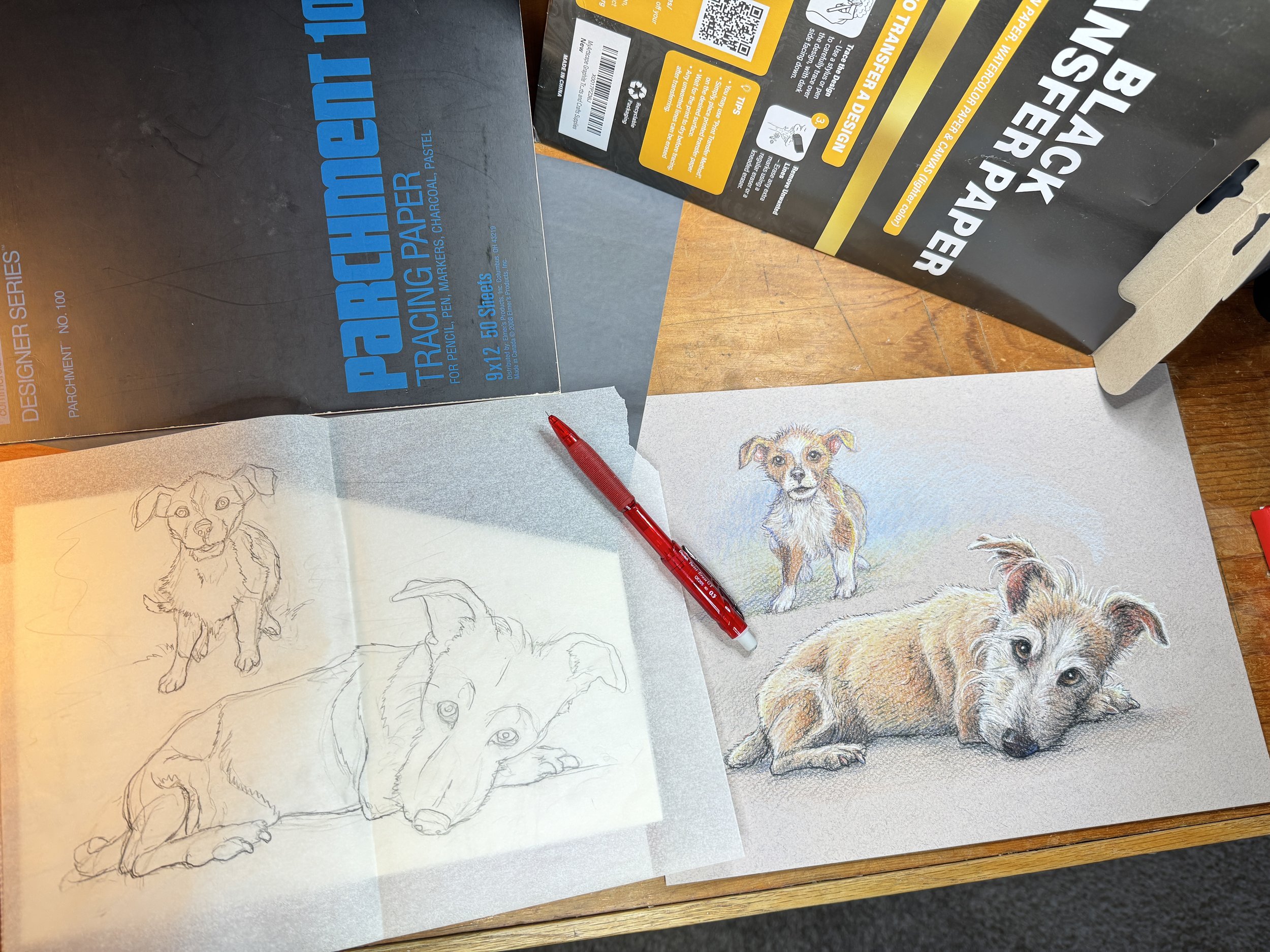
So to let myself work how I am comfortable while not abusing my nice art paper, I am trying a new technique, which is to start my sketch on tracing paper, and then do my final outline with a sheet of black transfer paper above the working art surface.
sketch-sketch-erase-sketch-sketch-erase-sketch-sketch-erase
My first experiment with this went… surprisingly well. I was able to adjust a lot of the proportions of the dog instead of feeling compelled to accept imperfect lines out of fear of the eraser. No eraser even touched the toned paper, I went right from the transfer to colored pencil.
Now I look forward to trying this method with watercolor. And to also learn how many times a single sheet of transfer paper can be reused!
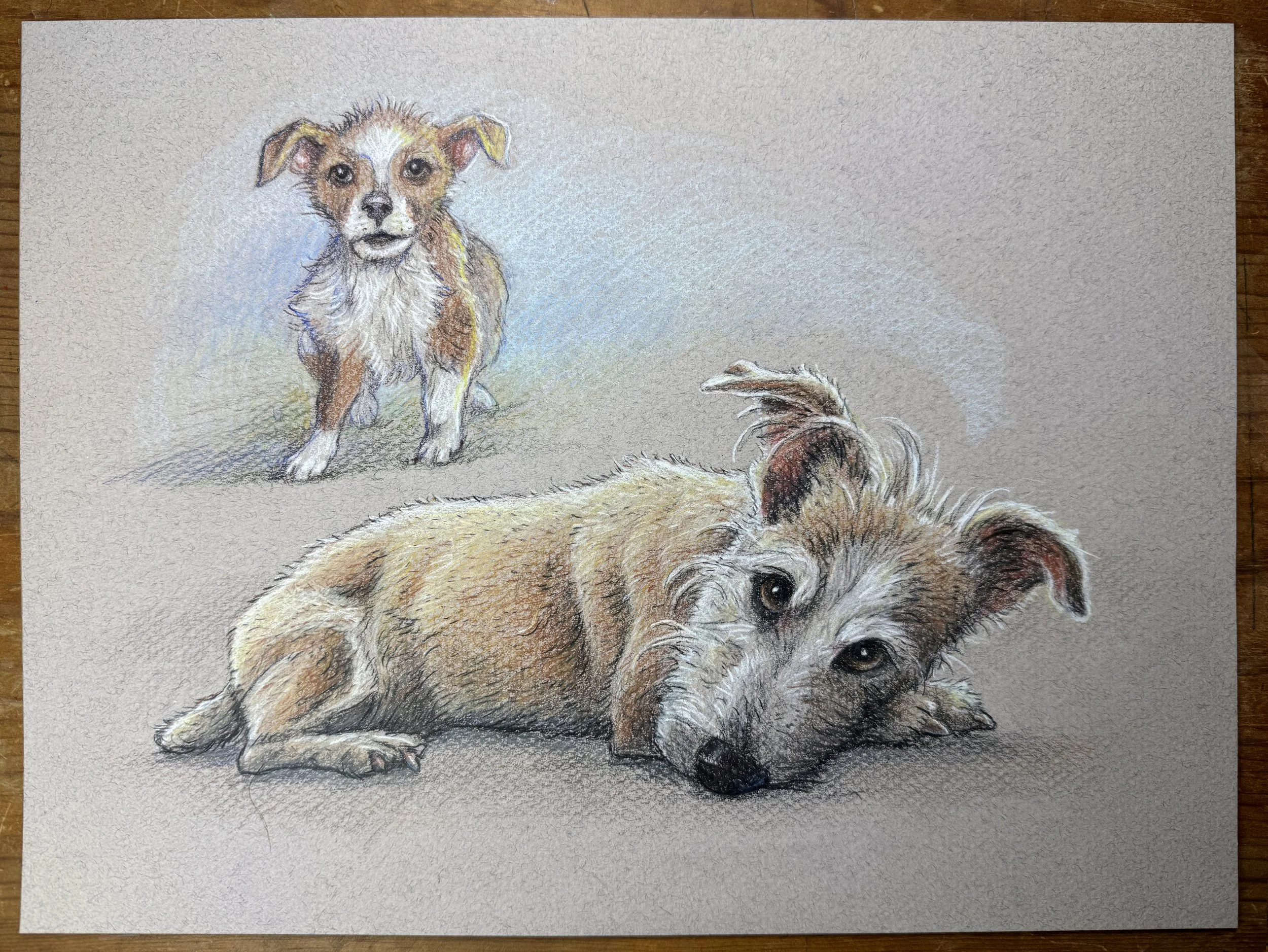
The dog remembering when she was a puppy, kind of a melancholy request by the person who commissioned the drawing but I am so here for it.
I can’t stop buying dice
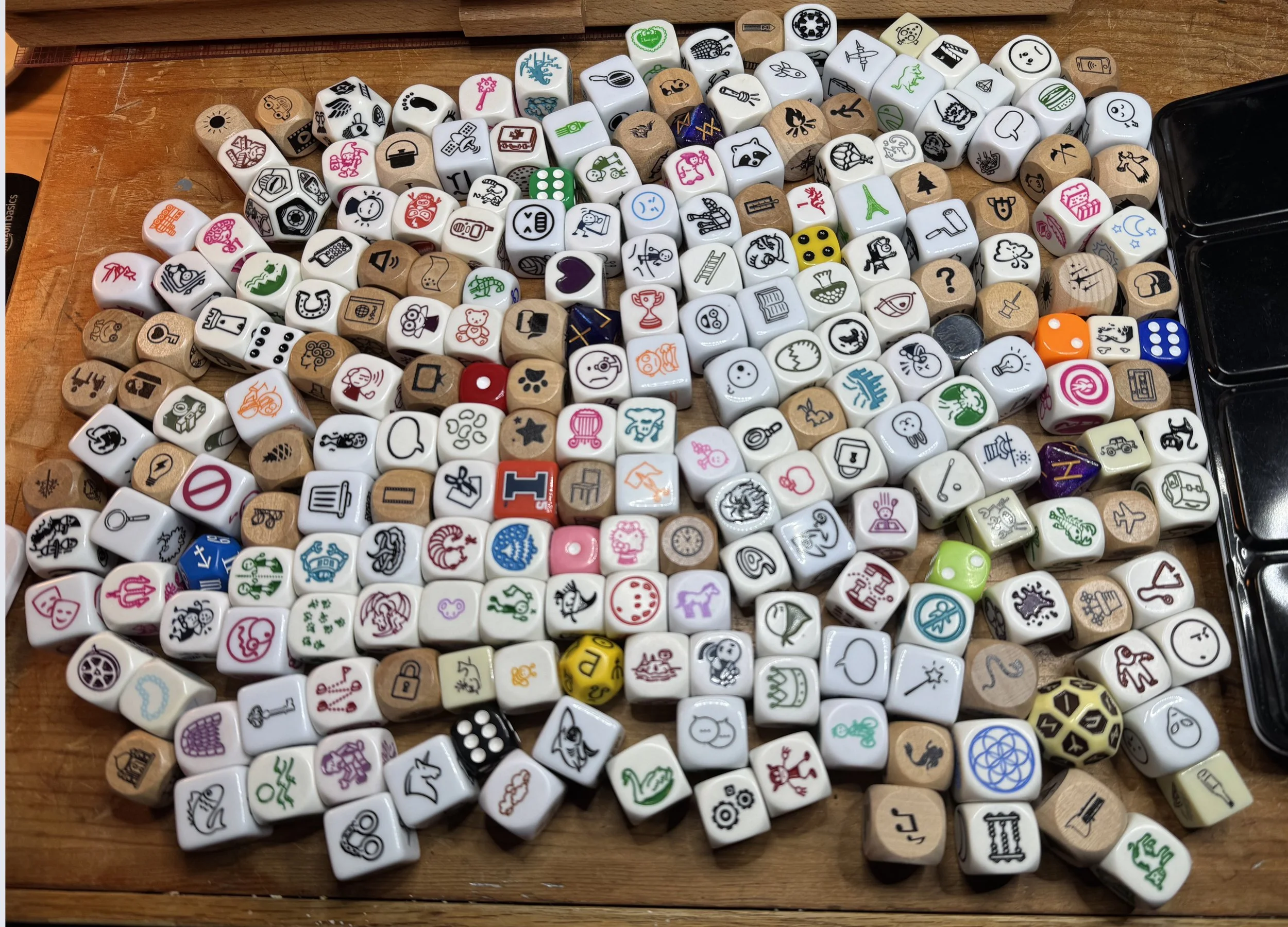
I can’t stop buying dice for my Draw or Die art challenge.
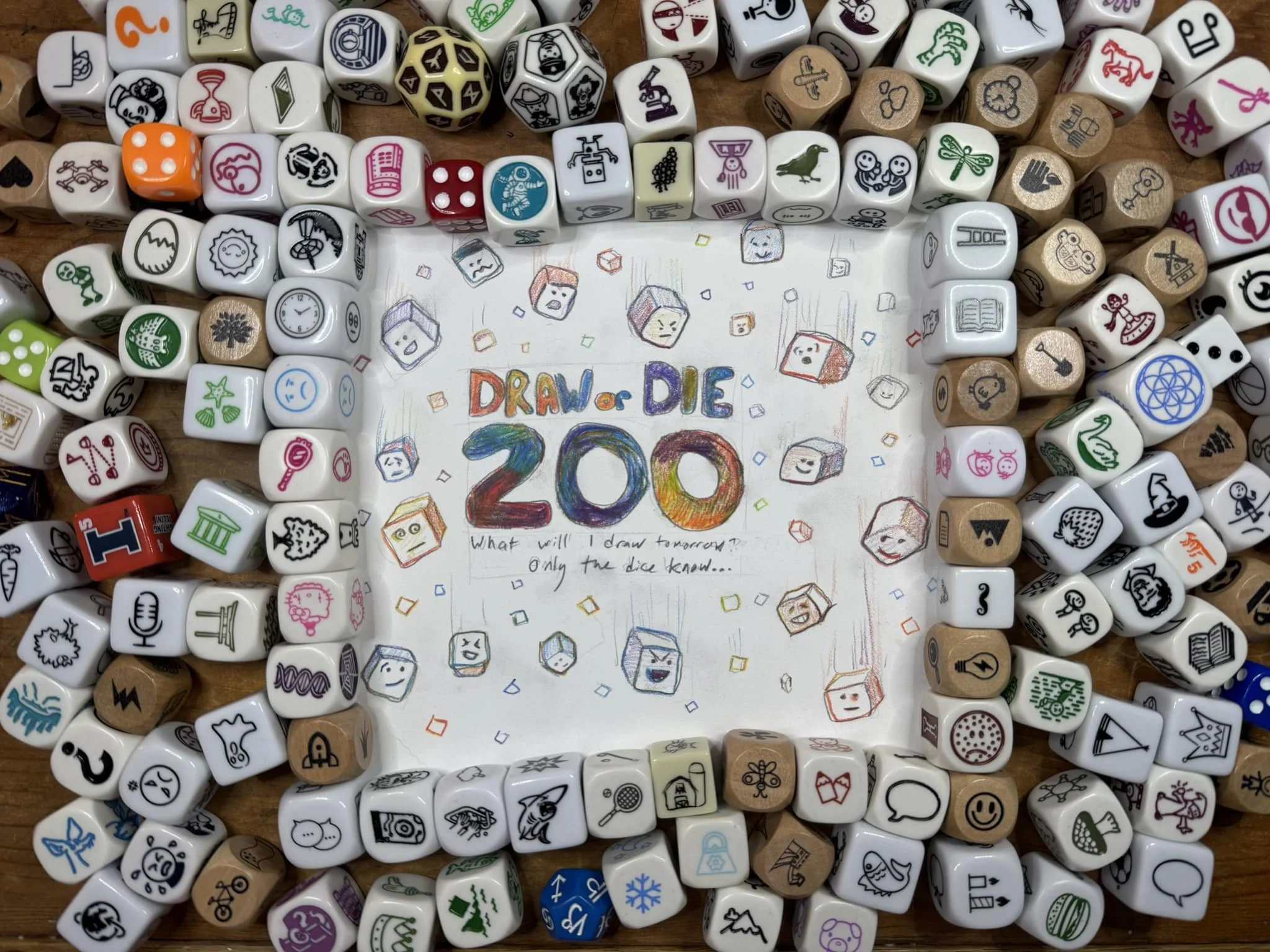
I haven’t counted them in awhile but I love them all.
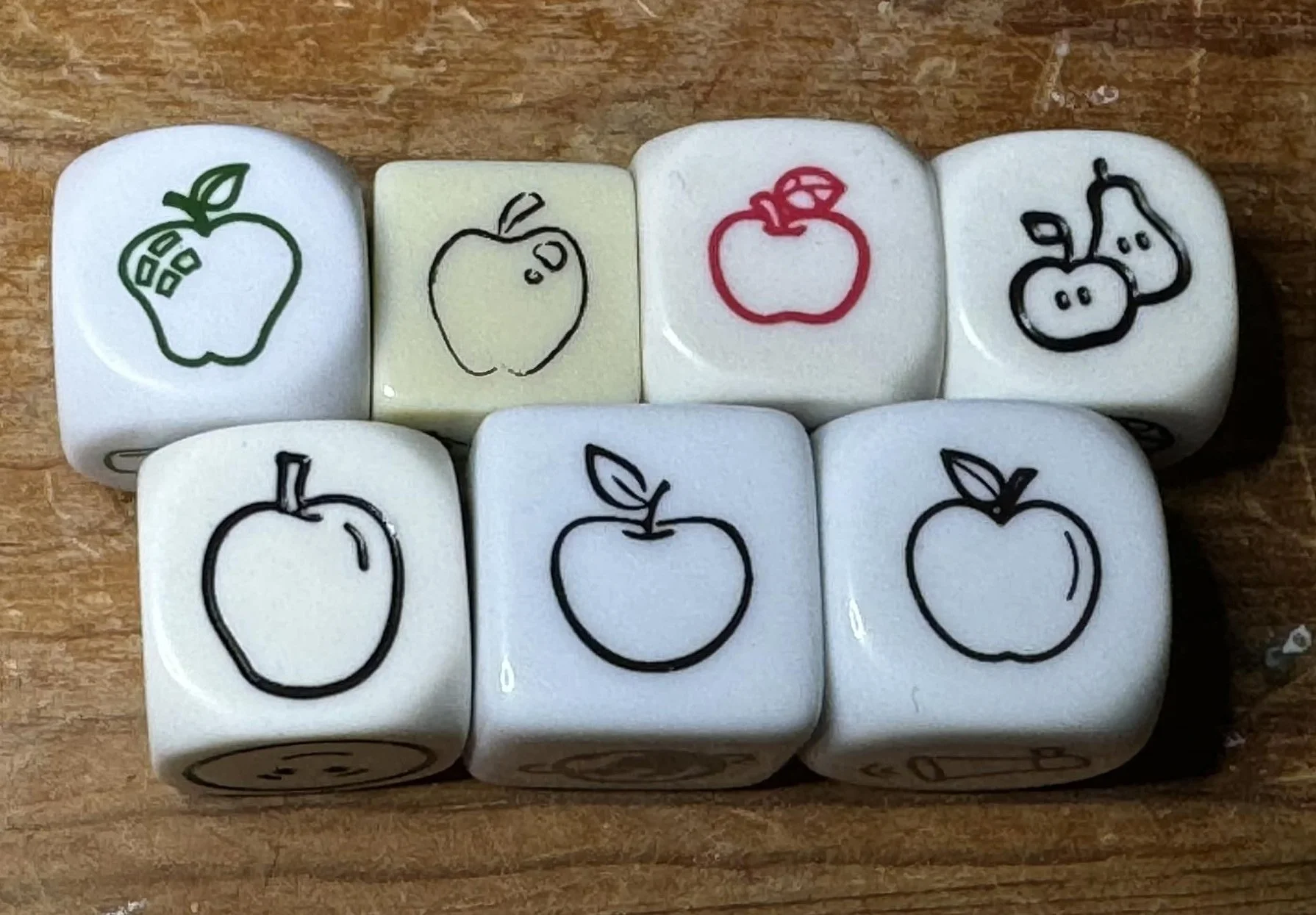
There are no exact duplicates…
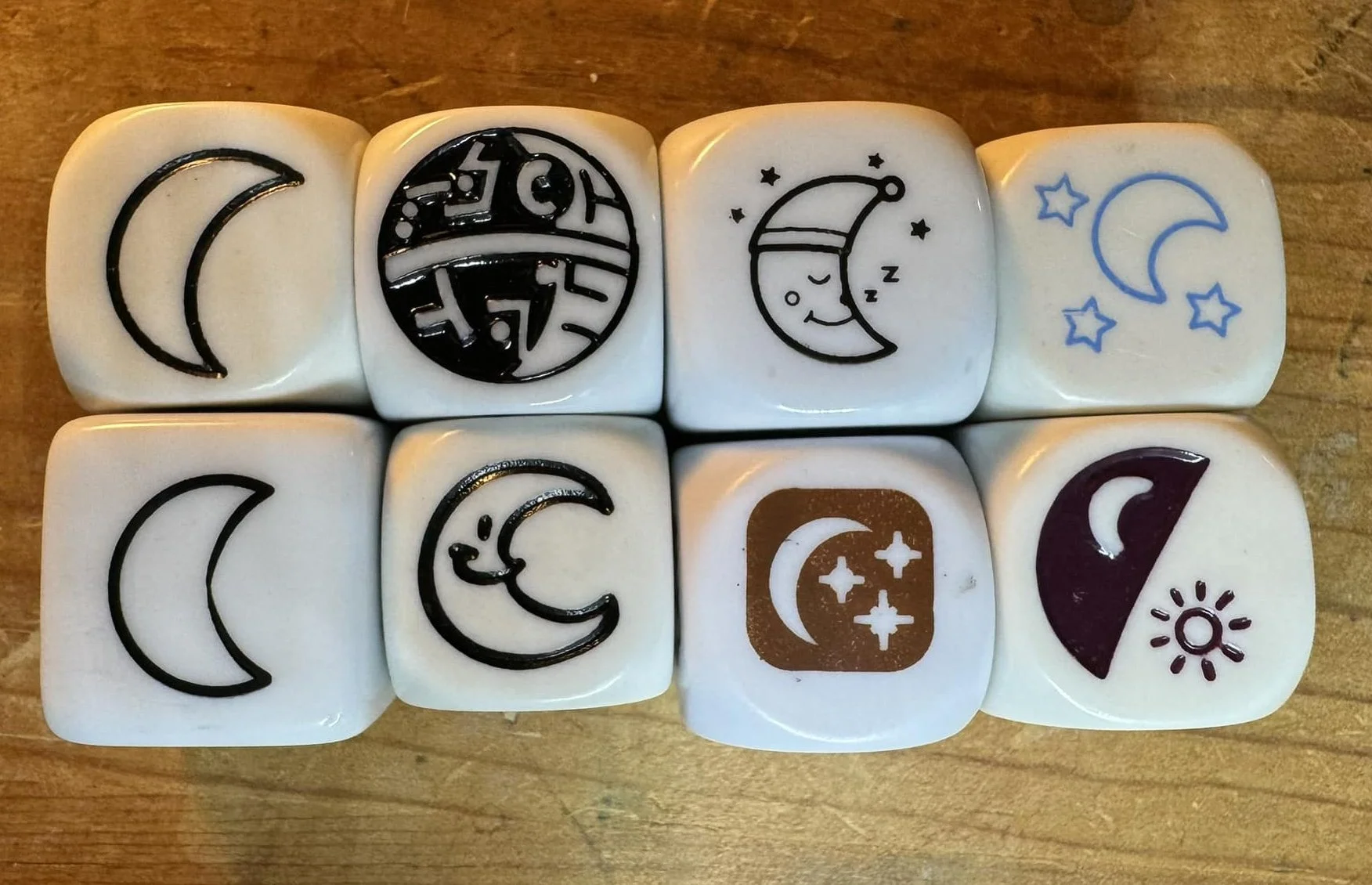
… but there are a few themes that show up again and again.
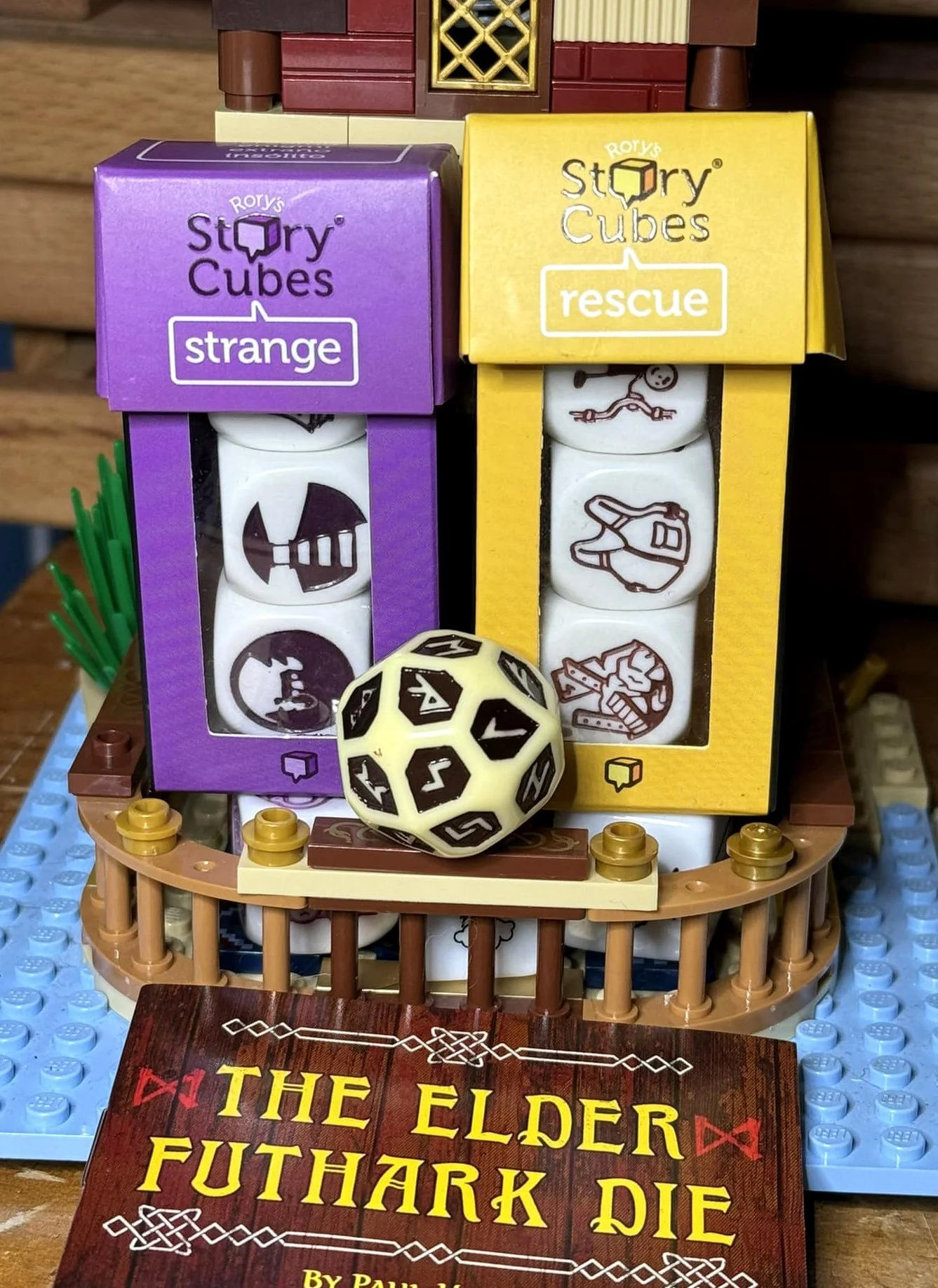
I go on eBay a lot.
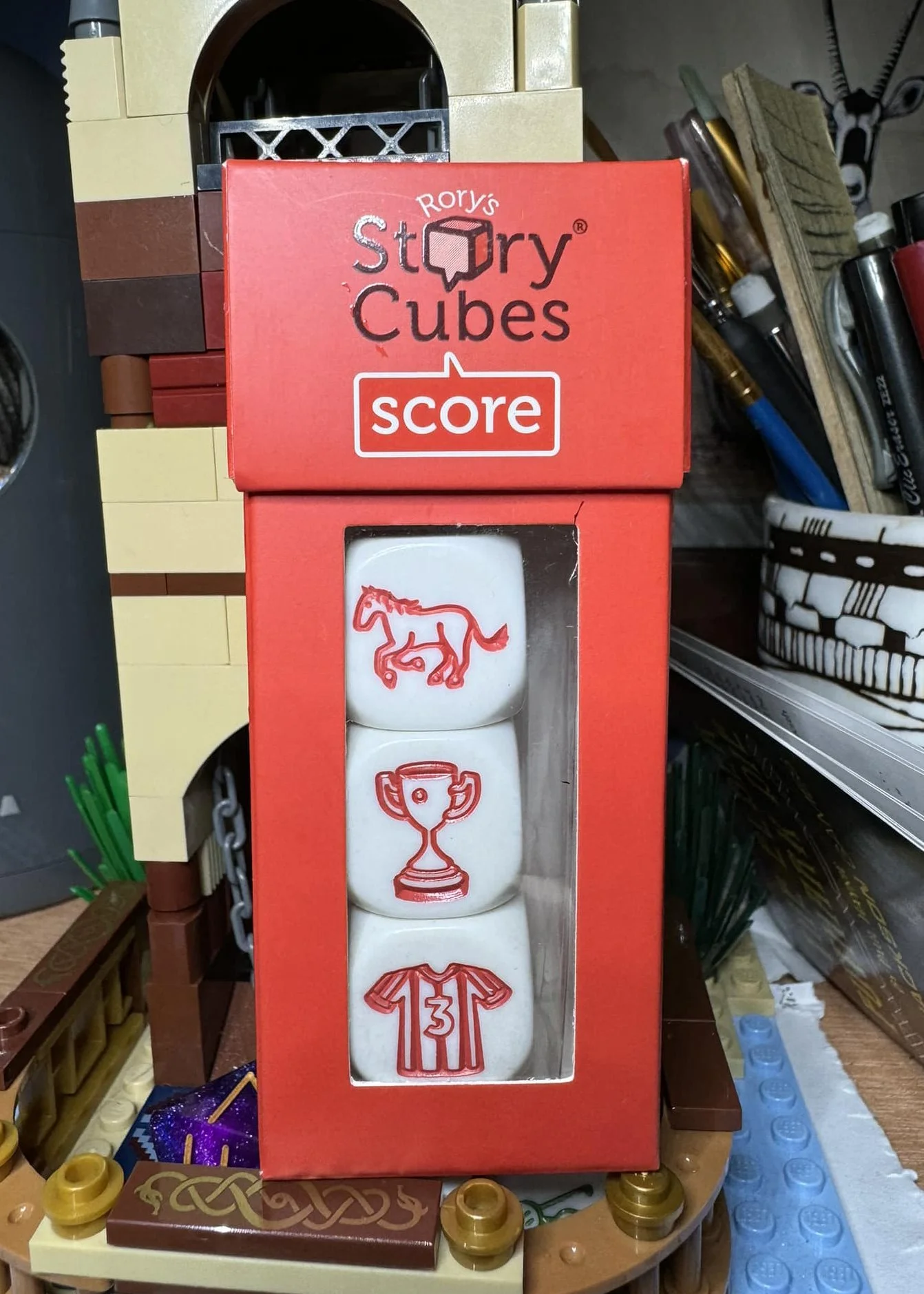
It’s exciting to find a set I don’t have yet. But believe it or not I’m still missing two sets of the Rory’s Story Cubes (not including the licensed sets like Batman and Scooby Doo).
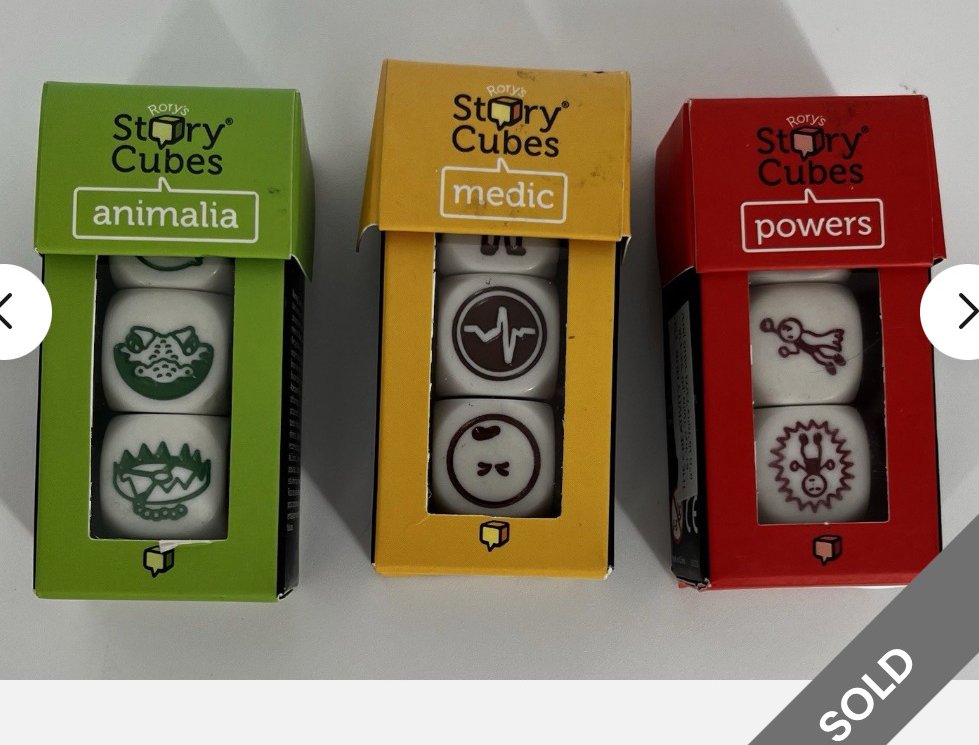
The “medic” was the set I was most excited to find after months of looking.
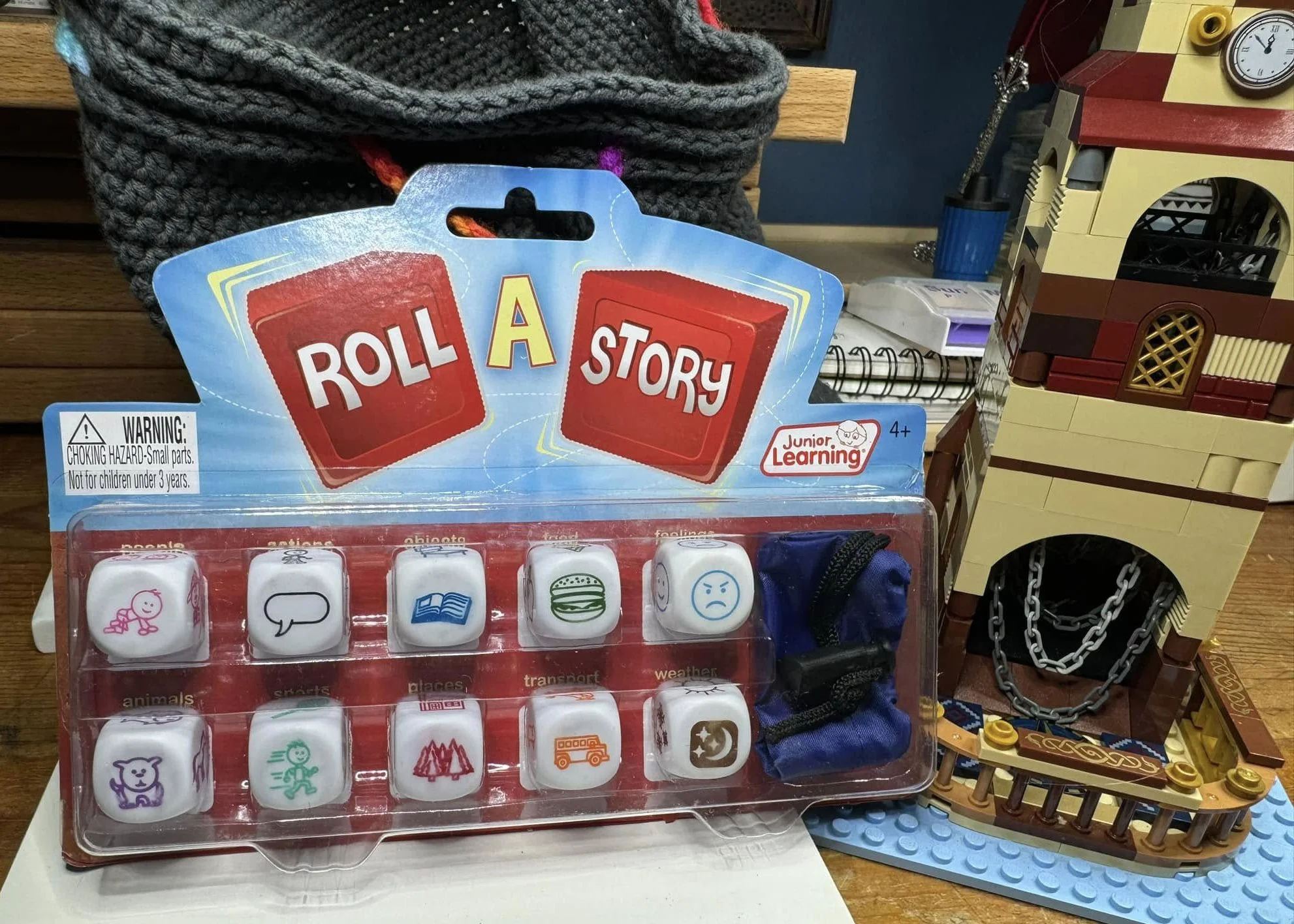
Thankfully lots of other companies have made similar products.
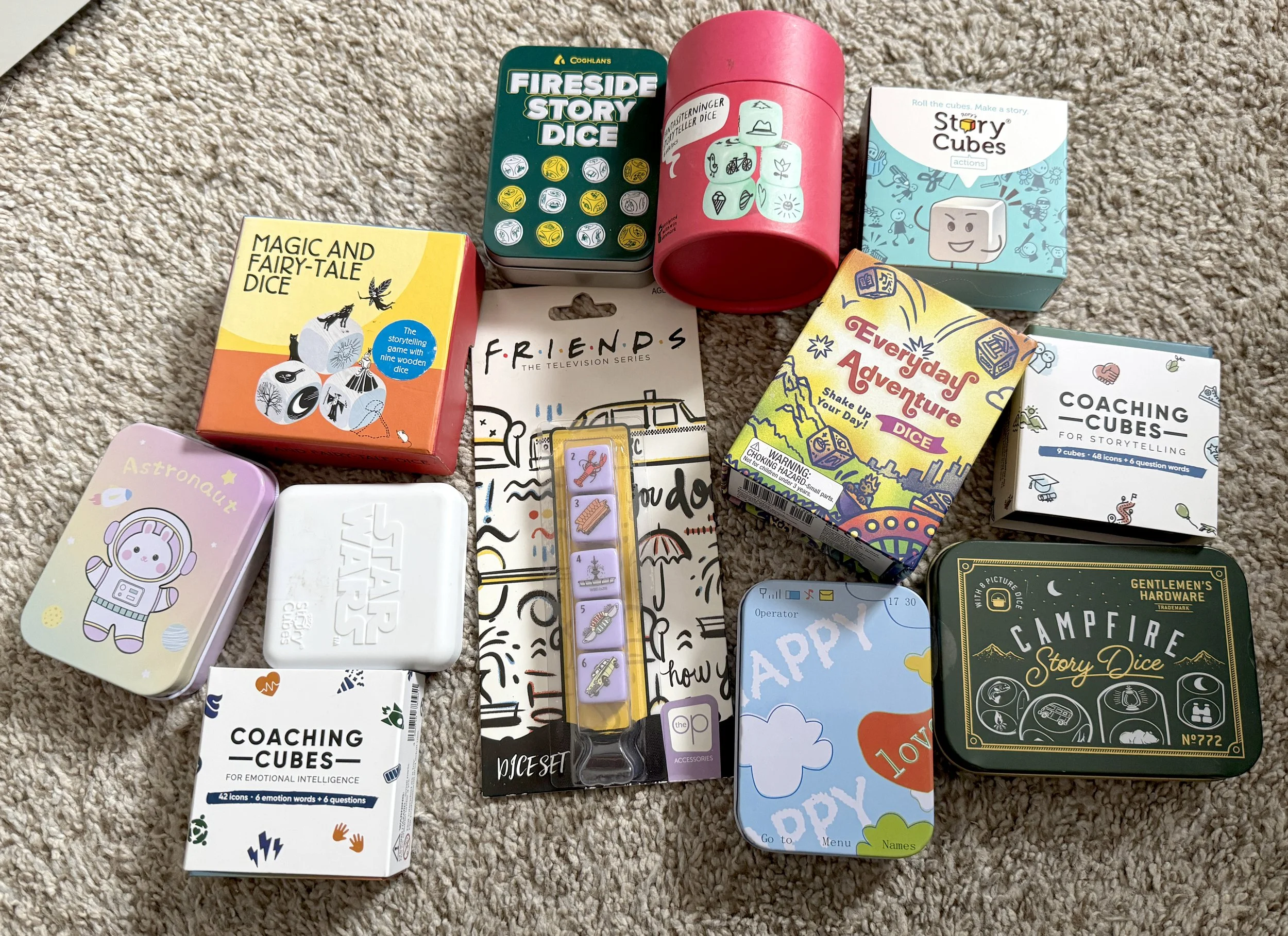
I wish I had been better about keeping the boxes from the start.
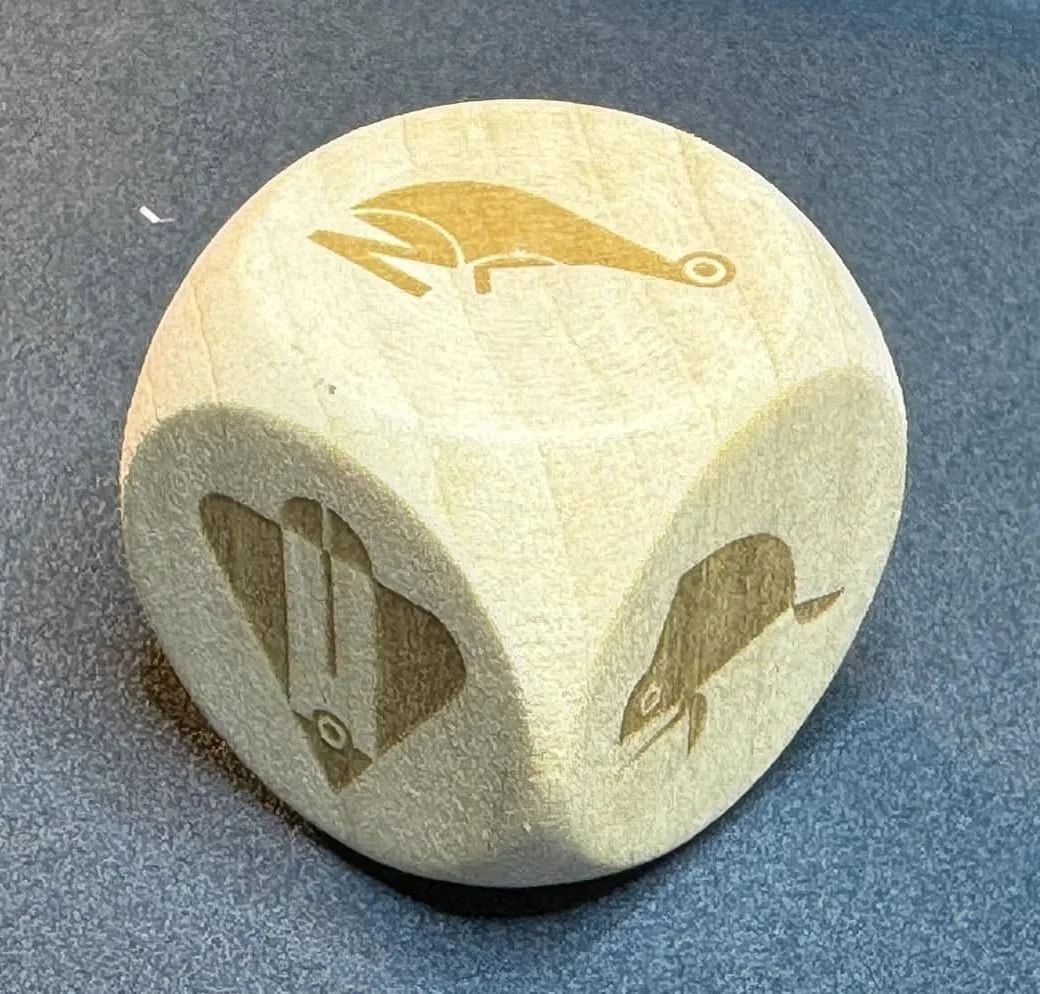
The one custom-ordered die in the bag. It has all the animal symbols from Riven, the sequel to Myst.
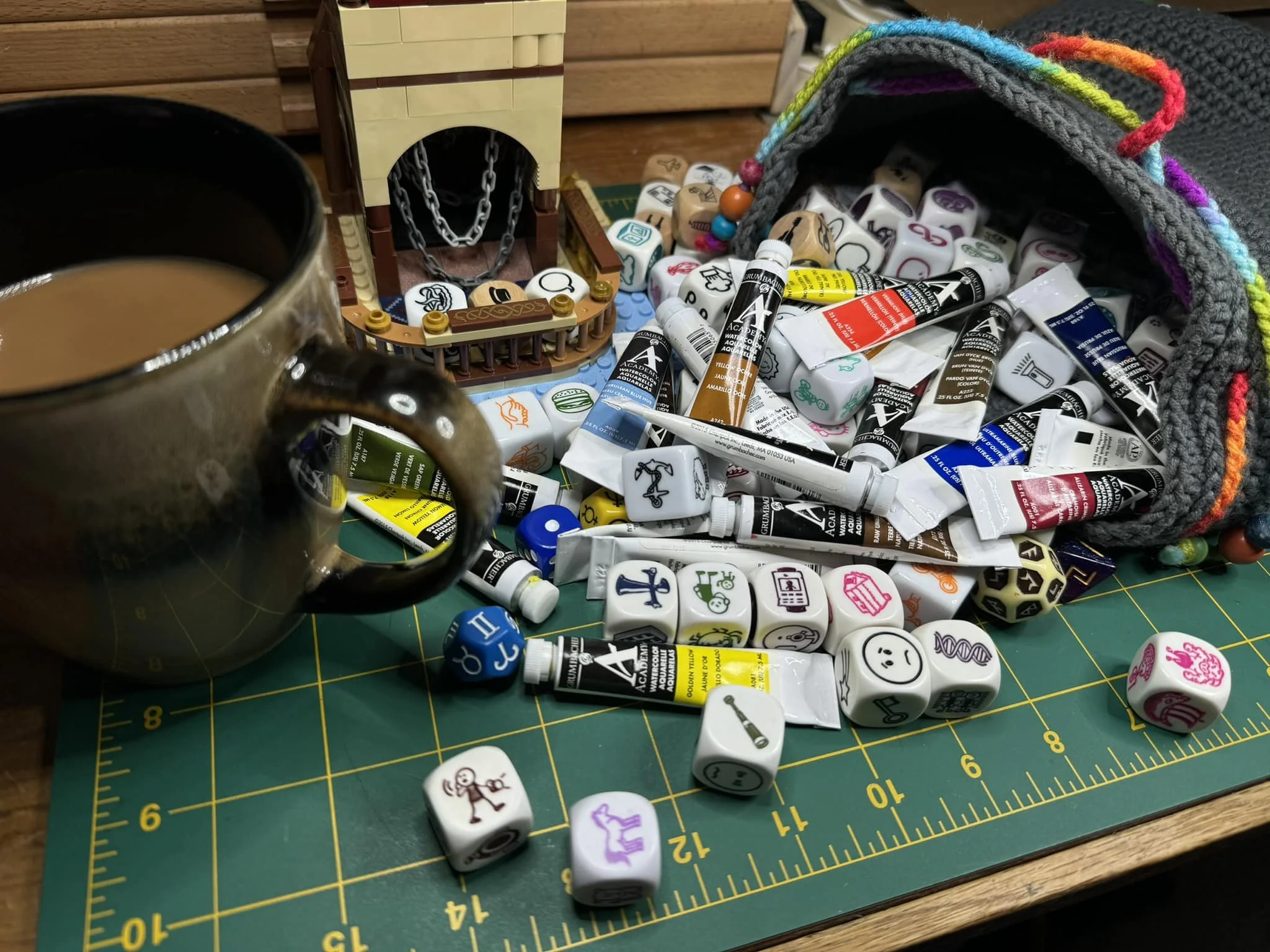
Speaking of custom-ordering, I had to have a special giant dice bag knitted to hold them all. Yet, I still can’t stop buying dice.
Collecting pre-2024 books in the fight against AI rot in print
Around 2012 for whatever reason, I got really hooked on zombie movies for awhile. I found myself stockpiling canned food, without even realizing it, until I couldn’t get that last can of corn into my cupboard. Now I am stockpiling for a different kind of apocalypse, one in which every printed book is potentially poisoned by inaccurate, environmentally damaging information. Whether or not this is another overreaction is yet to be seen.
“AI” (LLM) generative ‘art’ has been a reality for anyone on the internet for two or three years now, depending on what parts of the internet one frequents. I often reference online images as part of my illustration job, and avoiding this content has been a problem. Initially, I tried to keep a list of all the websites I knew that hosted it, to add a “-website” to my internet searches, but even that stopped working after awhile, and the list had grown to almost 25 sites. So, I came up with a new solution, to add “before:2023” to any Google Image Search. A solution that might not work forever…
Because here at the start of 2026, AI images are starting to find their way directly or indirectly, into a place I once considered completely safe and naively thought always would be; the printed book.
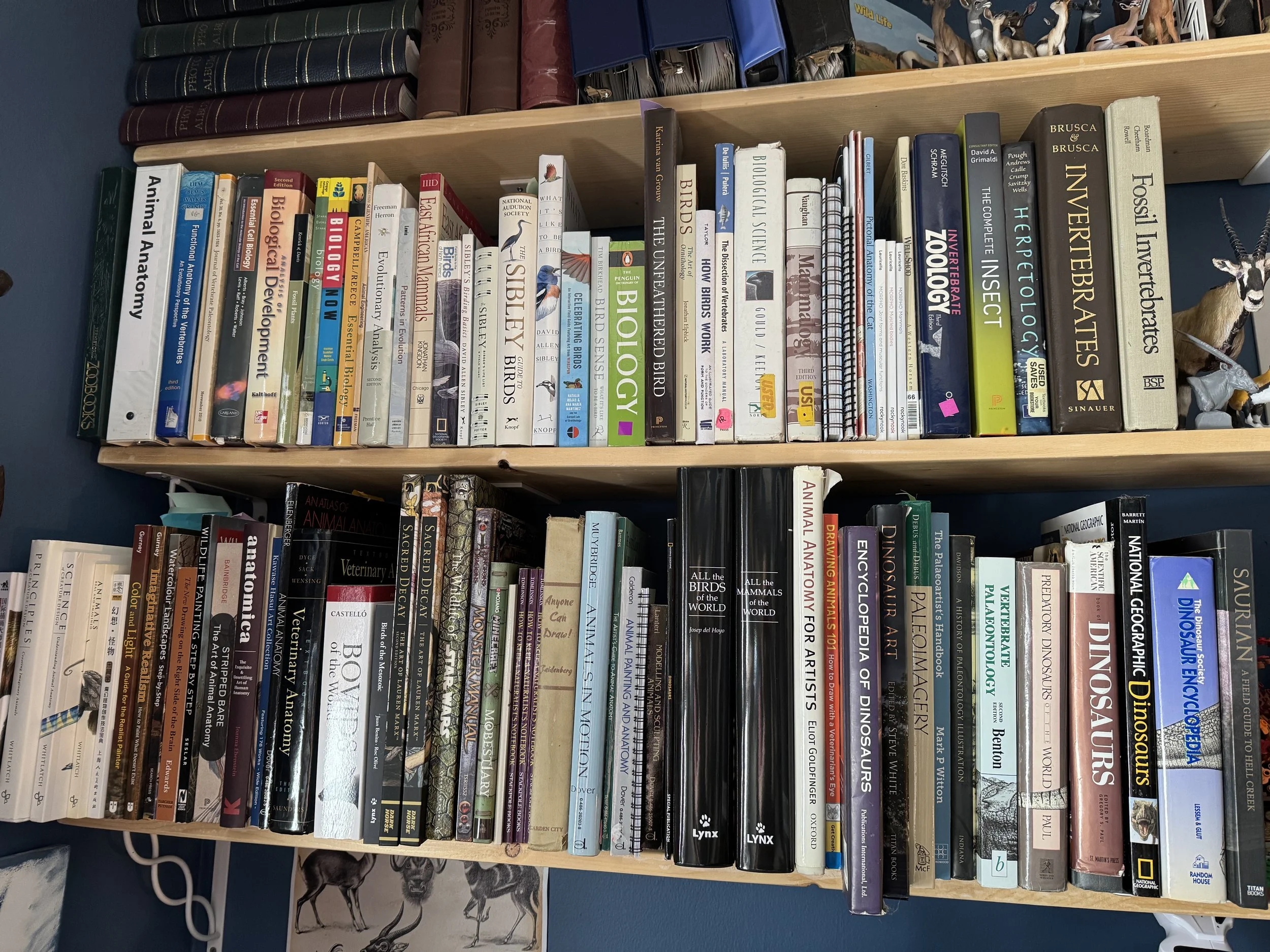
All my books about non-human animal anatomy and drawing. Lots of dinosaur stuff, there’s still a part of me that wants to be a paleontological illustrator.
It’s not just mass-produced slop meant to make a quick buck in the self-publishing spaces. In my twenty years in the scientific illustration career space, I have seen my share of poorly-referenced work. And when incorrect references are a google search away, it is inevitable that AI slop will find its way onto the printed page in ways that might be obvious or even provable. You can never know for sure what an illustrator was referencing when creating an illustration, and authors aren’t always a perfect filter for accuracy and quality.
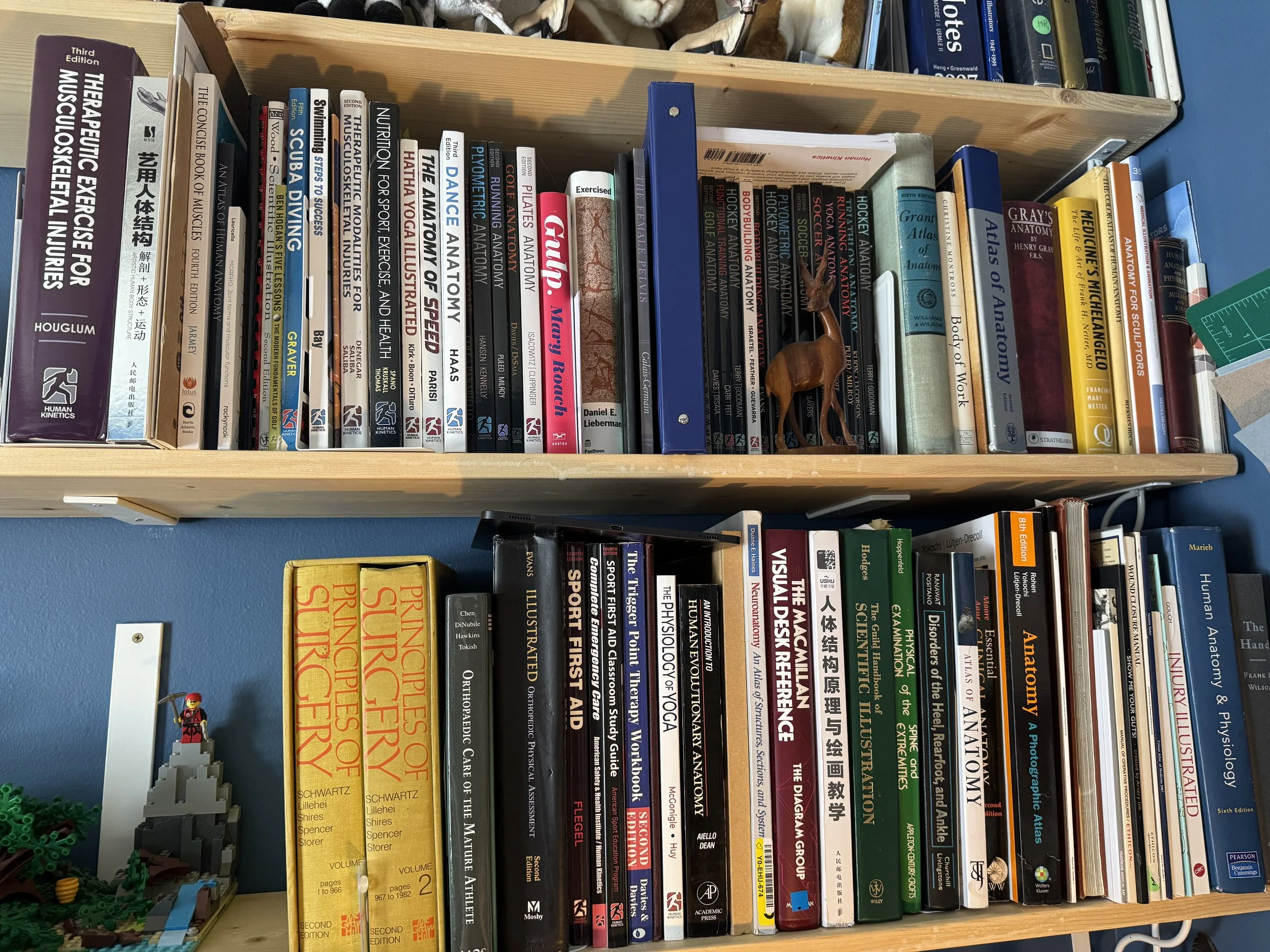
The human anatomy side of my collection
The ‘crawlers’ that steal imagery for their outputs are now inundated with the amount of AI images too. They ingest this material same as our art and photos, cannibalizing and furthering the rot. The entire internet is decomposing, and more than ever we need to separate ourselves from the ‘feed’ and algorithms that want to tell us what to read or consume or look at. The physical book is the escape from this.

There are cheap books to be found everywhere! In addition to eBay I regularly check the book shop in the basement of our local library.
Now, like those cans of corn, quality feels less important when I am afraid of the worst case scenario. It’s about amassing as many texts as possible, and their being in bad shape or outdated is no longer a concern. If anything, I have been enjoying opening books and seeing someones highlighting and notes, even doodles. My favorite is seeing another person’s name in the inner cover, sometimes two, and I add my name to the list. It’s a real human connection in a world more and more intent on dividing us and keeping us focused on short-form content.
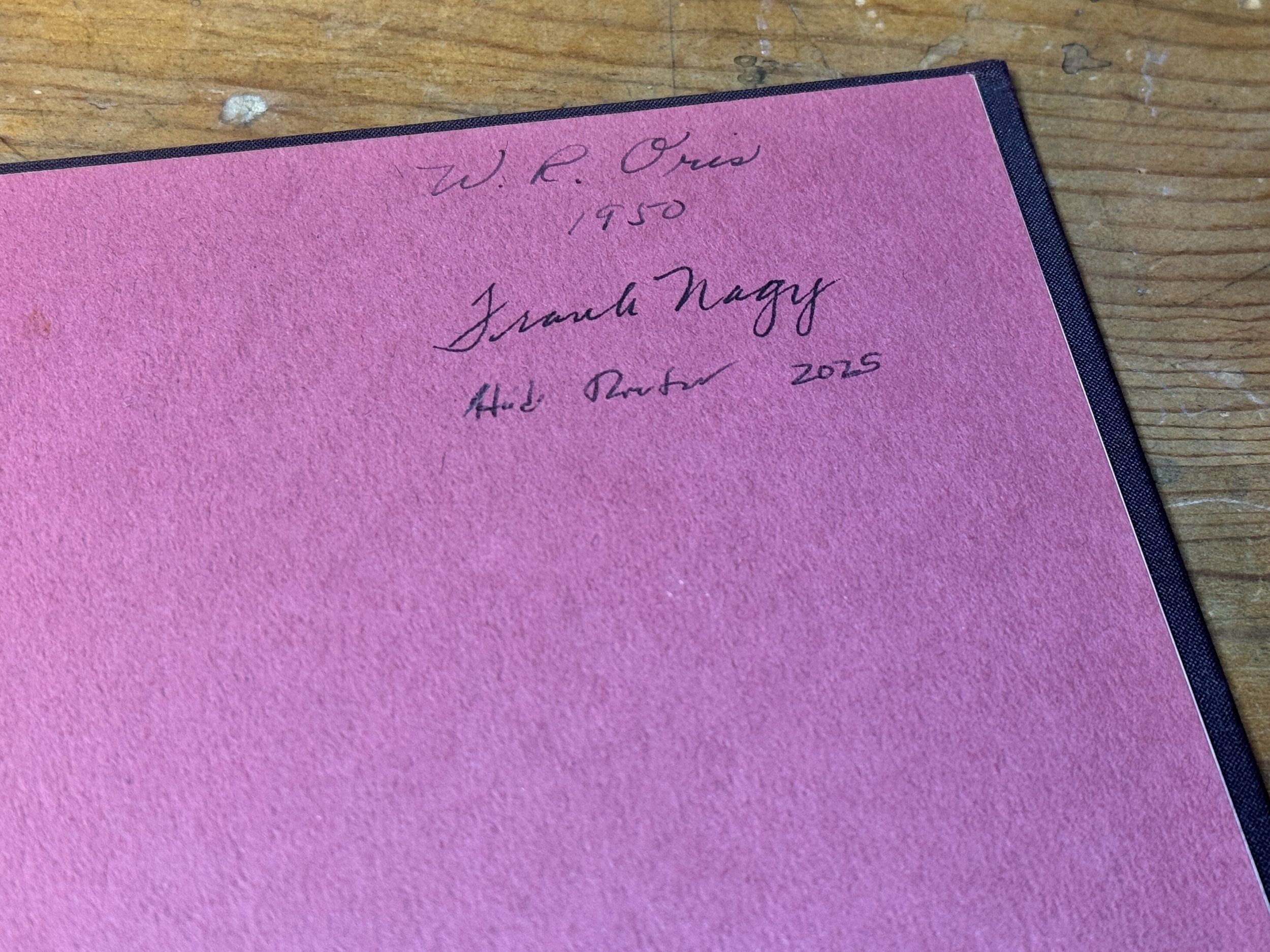
I am the third owner of this collection of Max Brödel work printed in 1945